
Executive Summary
The Starting Point
Dialog Health – a HIPAA-compliant healthcare texting platform with a 71 NPS score – had built its business primarily through referrals and expansion, with a website intentionally designed as a validator for that motion. When the go-to-market focus expanded toward more new-logo acquisition in mid-2024, SEO was added as a new marketing layer. Baseline at that point: ~150 non-brand clicks/month, 82% branded traffic, demo requests averaging 5.2/month (1.9/month from search), limited non-brand rankings, and no existing link building program.
The Approach
A full-funnel content strategy executed at 2 blog posts per week for 21 months straight, powered by a 12-step AI content pipeline built in Claude Code. 23 statistical “linkable asset” posts were created at a total cost of $1,380. No competitive comparison content (per client request). No paid link building. No outreach.
Traffic & Rankings (July 2024 → March 2026)
| ~150 → 1,670 Monthly Google clicks (US) | ~10k → 419K Monthly impressions | 34.1 → 10.8 Average position (page 3–4 → page 1) |
Core keyword results: “healthcare texting solution” → #1 | “healthcare SMS” → #1 (from #25) | “healthcare texting” → #3 | “healthcare texting reminders” → #2. Every tracked keyword now in the top 7.
Demo Requests
| 5.2 → 7.7/mo Average monthly demos (+48%) | 1.9 → 4.3/mo Search-sourced demos (2.3x) | 12 demos All-time record month (Dec 2025) |
Link Building Strategy
| $1,380 → $164,100 – Content cost → estimated link value (119x ROI) | 547 Organic backlinks earned (zero outreach) | 120 → 1,143 Referring domains (nearly 10x) |
Backlinks from Nature.com, Forbes, Irish Times, Medical Economics, and hundreds more. March 2026 set the record with 79 backlinks in a single month ($23,700 in value – 17x the entire original investment).
Content Rewrites
3 rewrites. 3 wins. Rewrite #1: page 6–7 → page 1, heavily cited in AI Overviews. Rewrite #2: #9 → #3 within hours. Rewrite #3: #11 → #1 and held.
AI Search Visibility
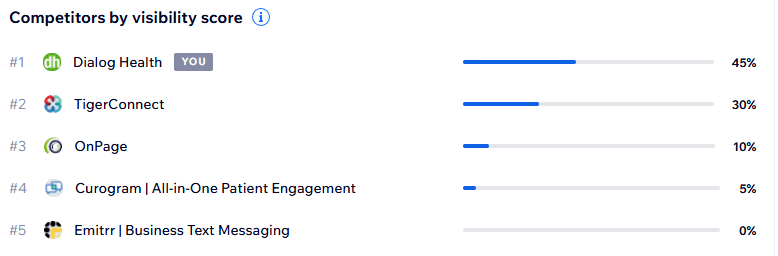
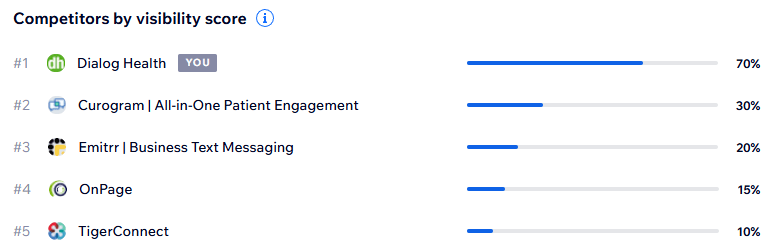
| #1 – 45% ChatGPT visibility | #1 – 70% Perplexity visibility | #1 (tied) – 55% Gemini visibility |
28,000 AI citations in 30 days across Microsoft Copilot. 87,000 citations over 3 months. ~50% of all site pages actively cited by AI platforms. First confirmed demo request from ChatGPT in March 2026.
The Starting Point
One of Dialog Health’s own clients once called them “the best kept secret in healthcare.”
It’s a great compliment about the product – and a fitting place to start the story of how SEO got added to Dialog Health’s marketing mix.
Dialog Health is a HIPAA-compliant two-way texting platform for healthcare organizations. Hospitals, ASCs, health systems, FQHCs – they use it to reduce no-shows, cut readmissions, streamline patient communication. The product is genuinely excellent. Their NPS score is 71. For context, the healthcare industry average is around 38.
A bit of context first. Historically, Dialog Health’s growth has come primarily through referrals and expansion with existing clients – health systems like HCA and AMSURG. The current website, launched in early 2024, was built intentionally as a validator site: a place where referred prospects could see case studies from organizations like their own and confirm that Dialog Health was the real deal. It wasn’t built to drive traffic. It wasn’t supposed to be.
A lean marketing team was covering account marketing, tradeshows, email, executive business reviews, webinars, and everything else a B2B SaaS needs. Traffic-driving SEO simply wasn’t where that time needed to go. There were also some technical hiccups at launch – indexing issues and Google Analytics setup gaps that cost a few months of analytics data on the new site – but those weren’t the focus either. The site was doing what it was built to do.
In the second half of 2024, Dialog Health’s go-to-market focus shifted. Still heavily expansion-driven (now roughly 80% expansion, 20% new logos), but with enough new-logo emphasis that brand awareness and demand generation became more important to the mix. That’s when the marketing team decided to add SEO and content as a new marketing layer on top of what was already working – and that’s where I came in.
Here’s what the SEO baseline looked like in July 2024. The site was ranking mostly for brand terms – “Dialog Health login,” “Dialog Health pricing,” and similar navigational queries. That made sense for a validator site: the people searching those terms had been referred and were doing their homework before a demo.
Non-brand rankings – the kind that surface a site to prospects who haven’t been referred yet – were thin. That made sense too. It hadn’t been the priority.
~150 clicks per month from Google in the US. That was the starting line.
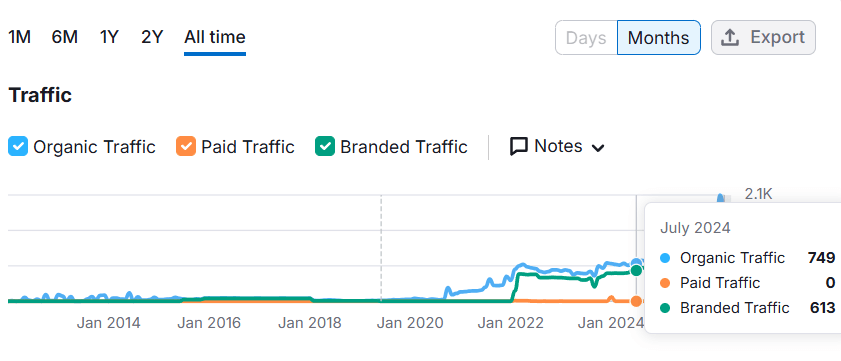
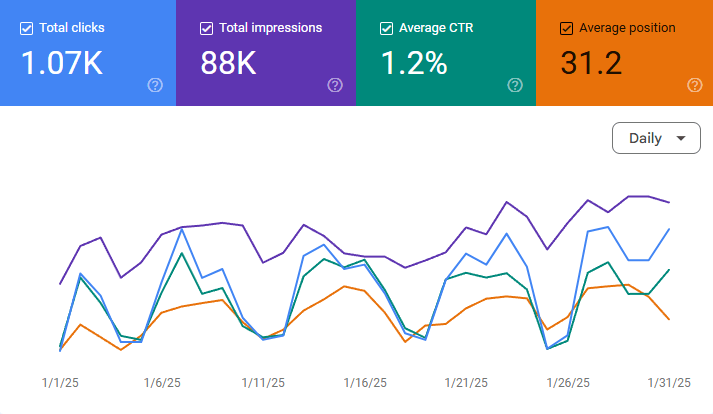
The blog had content – most of it built around specific customer case studies and popular use cases that supported expansion conversations with existing accounts. That was appropriate content for a validator site and useful for the team’s sales motion at the time. It just hadn’t been set up to rank broadly across the funnel, and the domain hadn’t accumulated much backlink authority yet either.
One content category was off the table from the start: Dialog Health made a deliberate brand-positioning call not to publish competitive comparison content – no “Dialog Health vs. X” posts, no “Best Healthcare Texting Platforms” roundups, no “X Alternatives” pages. That kind of content is typically high-intent and can perform well in AI search too, so we talked through the tradeoffs, but the positioning call was clear and we built the strategy around it.
So there was fresh ground to cover on the SEO side: limited domain authority, no non-brand rankings yet, no content strategy built specifically around search, and a restriction on one of the most effective content types in B2B SaaS.
What I had to build on was a genuinely strong product and a team that already knew how to tell great customer stories. When your NPS is 71 and your case studies show 53% no-show reductions and 92% post-op call eliminations – you have real material to work with.
My job was to get Google – and, eventually, AI search – surfacing those stories to the right people.
Demo requests – the KPI that mattered most for this engagement – were averaging about 5-6 per month. About 2 of those came from Google. The rest came through referrals, news articles, and other channels that had been driving the business for years. Organic search simply hadn’t been built up as a demo-generation channel yet.
Dialog Health is enterprise software. There’s no set pricing page, no self-serve checkout. Every implementation is different – a 3-location ASC has completely different needs from a 40-hospital health system. Existing clients and referrals already know the platform, but for new-logo prospects coming in cold, the demo is where the product’s value gets properly shown for each buyer’s specific situation. That’s why demo requests were the KPI we tracked most closely for this engagement.
That was July 2024. Here’s what happened next.
The Strategy
Before any content got written, there was groundwork. Strategy sessions with the Dialog Health marketing team to get aligned on business goals, target audience, and the sales focus shift that had made SEO a priority in the first place. A review of how the blog had been serving expansion conversations under the validator-site approach – which posts still had a role, what could be built on, and where the gaps were for a broader SEO play. A look at competitor activity to see who was ranking for what, with what kind of content, and how aggressively. And a keyword analysis together to understand which terms were commercially meaningful and which were realistically reachable given the starting domain authority.
With that context set together, the strategy took shape.
The first thing I had to internalize: Dialog Health’s product isn’t like buying a pair of shoes. A decision like implementing a HIPAA-compliant texting platform across a health system involves multiple stakeholders, months of evaluation, and a lot of trust-building. You don’t win that sale with a single blog post. You win it by showing up everywhere that decision maker looks – consistently, with real value – until they’re ready to raise their hand.
So the goals were straightforward:
- Rank for keywords critical to the business – not just brand terms
- Increase organic visibility and traffic from the US market
- Get in front of the right decision makers – C-suite, practice managers, hospital administrators, IT directors
- Drive demo requests through organic search
- Eventually, get recommended by AI search platforms (this goal got added later as AI search grew)
The content strategy I proposed had four layers.
Top of funnel – cast a wide net. General topics that healthcare decision makers are actively searching for: how to improve patient satisfaction, reduce no-shows, streamline operations, boost ROI. The kind of content that builds topical authority and starts putting the brand on their radar.
Middle of funnel – get specific. Content that showcases how a texting platform solves real problems for specific types of organizations. Hospitals have different pain points than ASCs. FQHCs operate differently than call centers. The content had to reflect that.
Bottom of funnel – this is where the brand-positioning call shaped our approach. With competitive comparison content off the table, the bottom-of-funnel play became drilling deeper into specific hospital departments, specific decision-maker roles, and specific use cases. That became the angle that fit both the search opportunity and Dialog Health’s positioning.
Linkable assets – this was the move that changed everything. Rather than allocate a separate link building budget – the standard line item in most SEO programs – we decided to route that spend into statistical blog posts instead: comprehensive, data-rich resources that other websites would naturally link to when citing healthcare statistics. 23 posts at roughly $60 each. A $1,380 investment. The idea was simple: build content so useful that the backlinks come to you.
You’re not going to want to miss what this $1,380 turned into. If you’re impatient, skip ahead to that section now. Honestly, that’s probably what I would do too.
Publishing velocity was set at 2 blog posts per week. Consistent, every week, from day 1. That pace never changed throughout the entire engagement. What changed was the quality, the strategy behind each piece, and the cumulative authority those posts built over time.
The Content Engine
Publishing 2 posts a week isn’t hard. Publishing 2 posts a week that are genuinely useful, SEO-optimized, on-brand, and backed by real research – every single week, for 21 months straight – that requires a system.
So I built one.
Every blog post goes through a 12-step pipeline before it goes live. Not some of them. Every single one. The latest iteration of the system is built in Claude Code, and the articles are written with AI. I’m upfront about that. The difference is in how the system is designed.
It starts with deep-dive research – not a quick Google and a rewrite. Real research, cited sources, saved as a standalone document the client can reference later. Then a case study analysis where the AI goes through Dialog Health’s actual customer case studies and identifies which ones are relevant to this specific topic. Not every article gets a case study. It’s never forced. But when a case study fits, it’s a real proof point – not a made-up “imagine a hospital that…” scenario.
From there, brand familiarization. Every piece needs to understand Dialog Health’s platform, capabilities, results, and differentiators well enough to reference them naturally – not like a sales pitch bolted on at the end.
Then comes the outline, followed by populating each subheading with the strongest data points from research. Not every stat makes the cut. I’m selective – 2-3 of the most authoritative data points per section.
This is where a checkpoint kicks in. The AI presents the full writing plan – every subheading, every data point that’s going into the article, every case study placement – and flags any potential issues before actual writing starts. This is where I step in again, go through all the materials, and make the final call on whether something needs to change. Usually it’s only minor adjustments at this point because the system is a well-oiled machine. But that human checkpoint is what keeps the quality consistent.
Honestly, I recommend Claude Code to everyone creating written content online. The process you can build inside it produces far more reliable outputs than anything else I’ve used. Once you iron out the kinks in your pipeline, you get great stuff out of it.
Then the writing itself – conversational, direct, written for healthcare decision makers who don’t have time for fluff. Every sentence earns its place. After that: key takeaways, excerpt, meta description, and a CTA section.
The whole system runs on a set of rules that never bend: no competitor mentions, no fabricated data, no fictional scenarios, case studies attributed clearly and used only once per article, brand mentions that are 100% organic and relevant. The content has to be good enough that a healthcare executive would find it valuable even if Dialog Health’s name were removed entirely.
That’s the bar. Every week. For 21 months.
Results: Traffic & Rankings
Here are the numbers. US-only traffic from Google – because that’s the market that matters for this client.
| Month | Clicks | Impressions | Avg Position |
| Jul 2024 (start) | ~150 | – | – |
| Dec 2024 | 790 | 77K | 34.1 |
| Mar 2025 | 1,254 | 152K | 28.5 |
| Jun 2025 | 1,354 | 253K | 21.6 |
| Sep 2025 | 1,192 | 284K | 18.0 |
| Dec 2025 | 1,201 | 328K | 16.8 |
| Mar 2026 | 1,670 | 419K | 10.8 |
From ~150 clicks a month to 1,670. From page 3-4 average position to page 1. Impressions went from practically nothing to 419,000 per month – the site is now showing up for a massive volume of searches that weren’t in scope when this engagement started.
And that’s just Google. Bing added another 1,200 clicks and 43,700 impressions in March 2026 alone.
But the real story is in the keyword rankings. Remember – the site was mostly ranking for brand terms when this engagement started.
Here’s where the core business keywords stand now in March 2026:
| Keyword | Where We Started | March 2026 |
| healthcare texting solution | Not ranking | #1 |
| healthcare sms | #25 | #1 |
| healthcare texting | #6 | #3 |
| healthcare texting reminders | #11 | #2 |
| healthcare texting platform | #4 | #4 |
| healthcare text appointment reminders | #44 | #7 |
Two #1 rankings. A #2. A #3. Every single tracked keyword in the top 7.
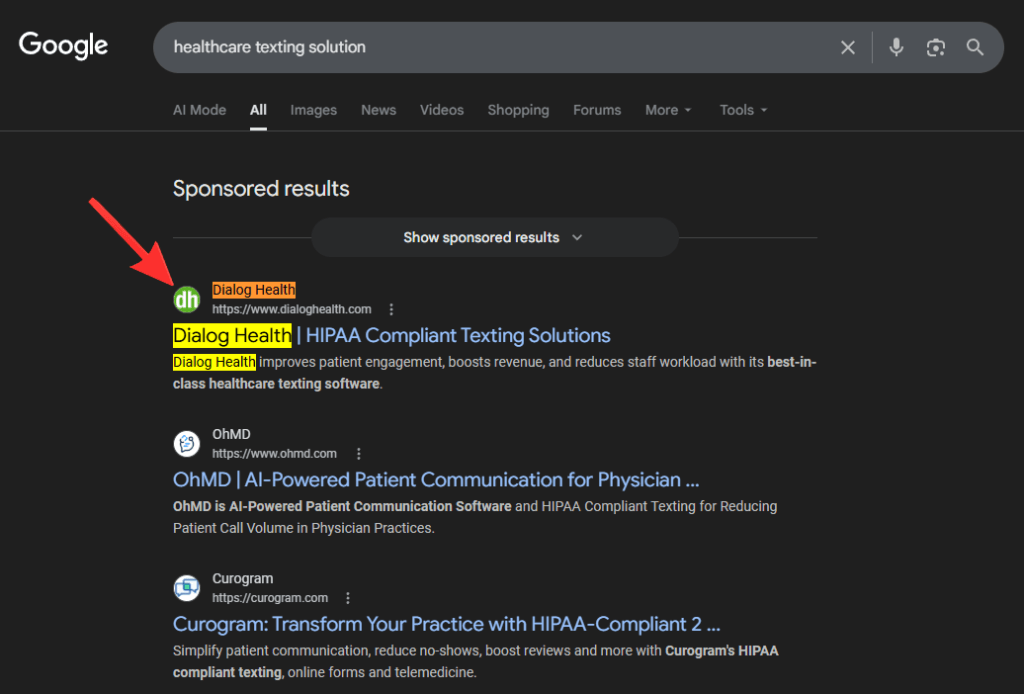
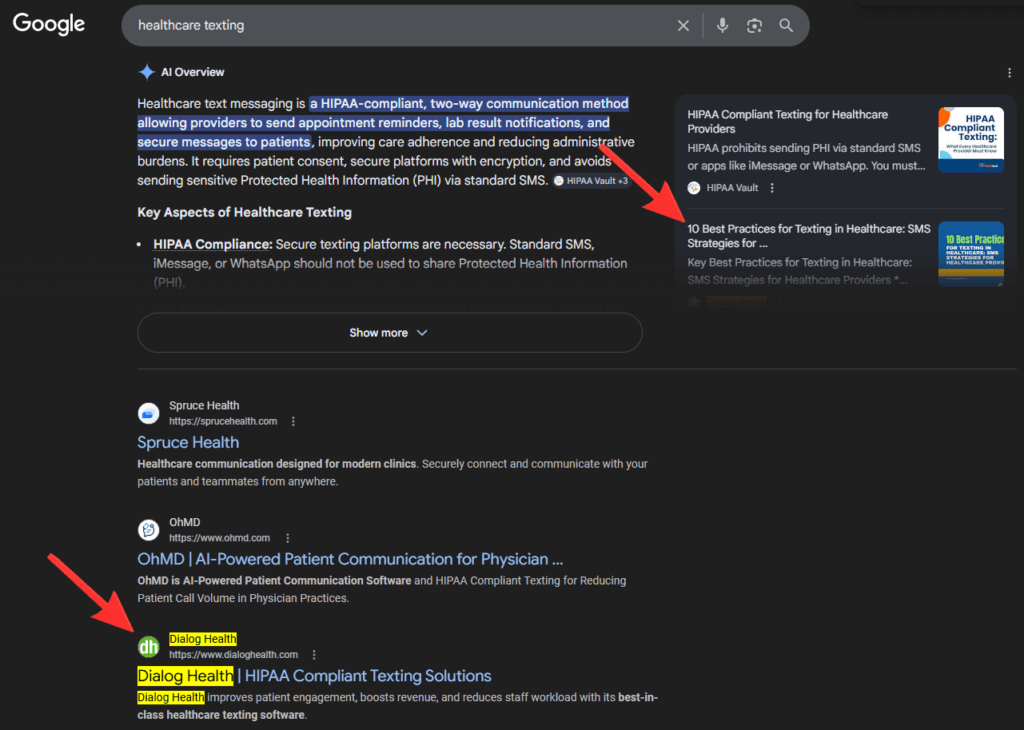
“Healthcare SMS” is probably the most satisfying one. It went from #26 – buried on page 3 – to #1. That didn’t happen overnight. It went 25 → 6 → 4 → 5 → 5 → 1. It took months of consistent publishing, building topical authority, and earning backlinks to get there.

Same publishing velocity the entire time. 2 posts a week. The rankings moved because the strategy worked – not because we outspent anyone.
Results: Demo Requests
This is the metric that actually matters for this engagement. Traffic is nice. Rankings feel good. But demo requests are what turn all of that into pipeline. Worth noting: these aren’t $50/month SaaS signups. A single demo that converts could mean an entire health system. The value per conversion here is fundamentally different from most SaaS metrics.
I’m going to be honest here – the numbers didn’t move right away. That’s SEO. You’re planting seeds for months before anything grows. The first year was mostly about building the foundation: topical authority, backlink profile, keyword coverage. Demo request velocity during that period looked basically the same as before I started. If you’re the type of client who needs results in 30 days, SEO is not for you.
But then it kicked in.
Before I started (October 2023 through June 2024), Dialog Health was averaging about 6 demo requests per month. About 2 of those came from Google. The rest came through referrals, news articles, and word of mouth – the channels that had been reliably driving the business.
Here’s what the most recent 6 months look like (October 2025 through March 2026):
| Month | Total Demos | From Google/Search |
| Oct 2025 | 2 | 1 |
| Nov 2025 | 8 | 3 |
| Dec 2025 | 12 | 7 |
| Jan 2026 | 10 | 7 |
| Feb 2026 | 6 | 3 |
| Mar 2026 | 8 | 5 |
December 2025 – 12 demo requests – was the all-time record. 7 of those came from Google. January hit 10 with another 7 from Google. Those are the two highest months for Google-sourced demos in the company’s tracking history.
Over this 6-month window, the average jumped to 7.7 demos per month – a 70% increase compared to the same 6-month period two years earlier. But the more important shift is the source mix. Google-sourced demos nearly tripled, going from about 1.5 per month to 4.2 per month.
That’s a new acquisition channel that didn’t meaningfully exist before.
Dialog Health was built on a strong referral and word-of-mouth motion – and that motion is still doing the heavy lifting today. What SEO adds is a different kind of channel alongside it: one that compounds. Every article published, every keyword ranked, every backlink earned – they stay working 24/7. The pipeline gets stronger every month without additional spend on the content that’s already live. Referrals and SEO now work side by side.
And here’s a detail I love: in March 2026, one of the demo requests came from someone who found Dialog Health through ChatGPT. Not Google. ChatGPT. The AI search strategy we added later is already converting. More on that in a bit.
Results: Content Rewrites
I’m a big believer in updating old content.
Not because I want to get paid twice for the same work. Because SERPs are living, breathing things. They change all the time. An algorithm might favor one type of content for a query today and a completely different type a year from now. New research surfaces. New data becomes available. Search intent shifts. If you’re not realigning your best content with what the SERP actually wants right now, you’re leaving rankings on the table.
We’ve only done 3 rewrites so far. All 3 delivered.
Rewrite #1
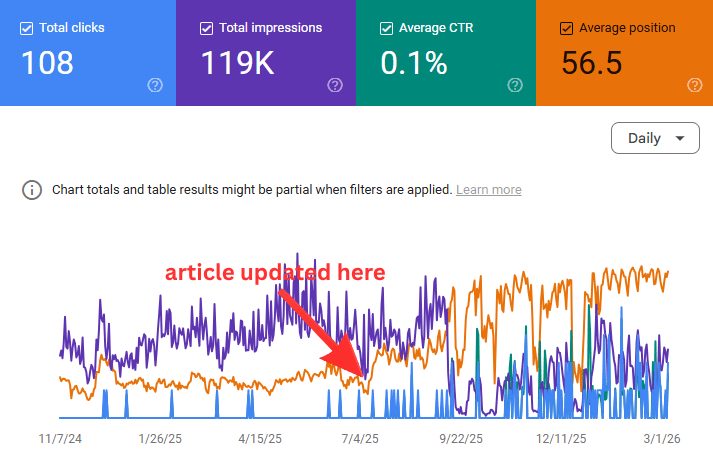
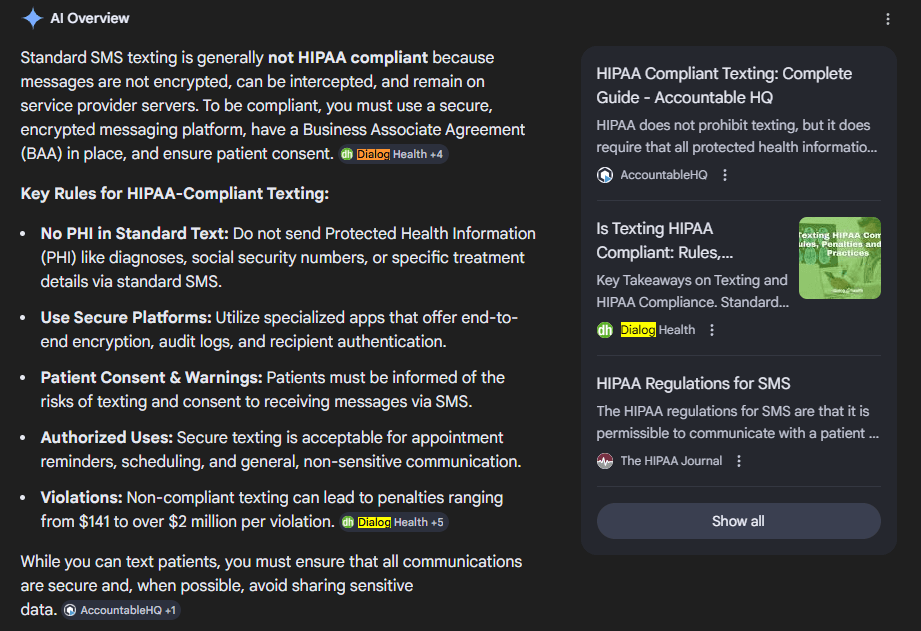
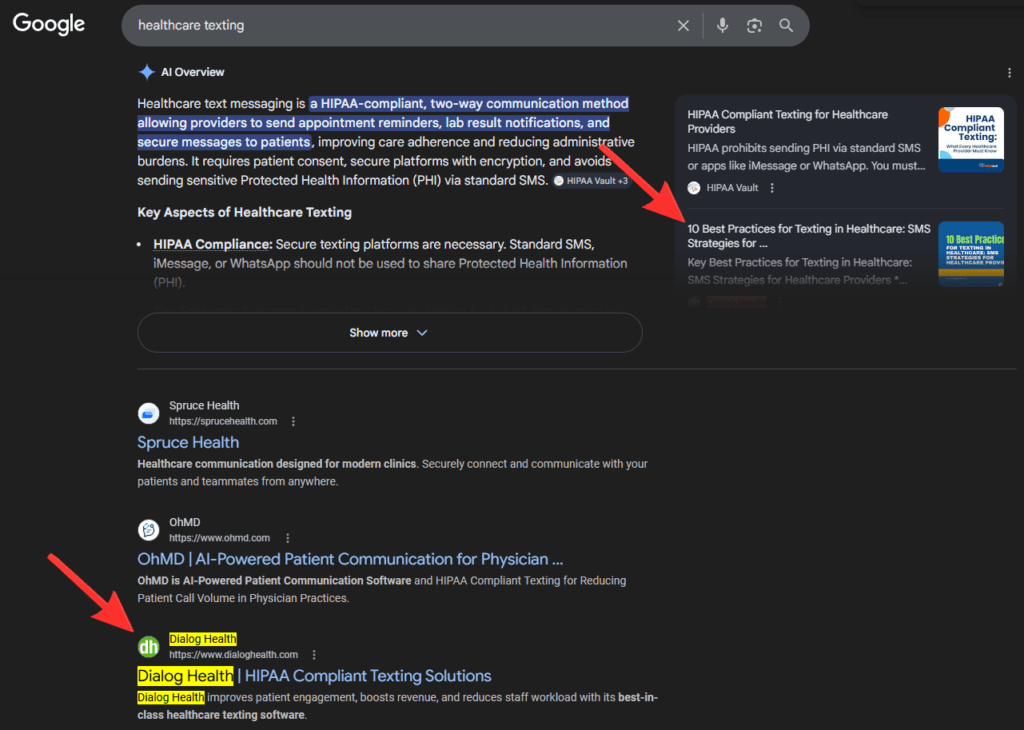
This was our HIPAA compliance and texting article – the very first blog post I published for Dialog Health back in July 2024. It didn’t rank for anything meaningful. A year later, in July 2025, I rewrote it from scratch using the improved content pipeline. The original just didn’t match what Google wanted for those queries.
The results took a few months to materialize, but the article went from page 6-7 to page 1. It started earning backlinks organically and got heavily cited in Google’s AI Overviews. The same article that did nothing for a year became a real asset – because the rewrite aligned it with current search intent, and because the domain was now much stronger than when the original was published.
Rewrite #2
This targeted one of our best-performing articles. It was already ranking #9 for its main keyword and driving solid traffic. But I knew the content could be better – my current writing process produces significantly stronger output than what I was using when the original was created over a year earlier. More concrete. More actionable. More comprehensive.
Rewrite #3
Same story. Another strong performer, ranking #11 for its main keyword but pulling in traffic from many related terms where it ranked higher. We rewrote it to make it more useful for readers. It jumped from #11 to #1 for the main keyword and stayed there. Rankings improved across the board on related keywords too.
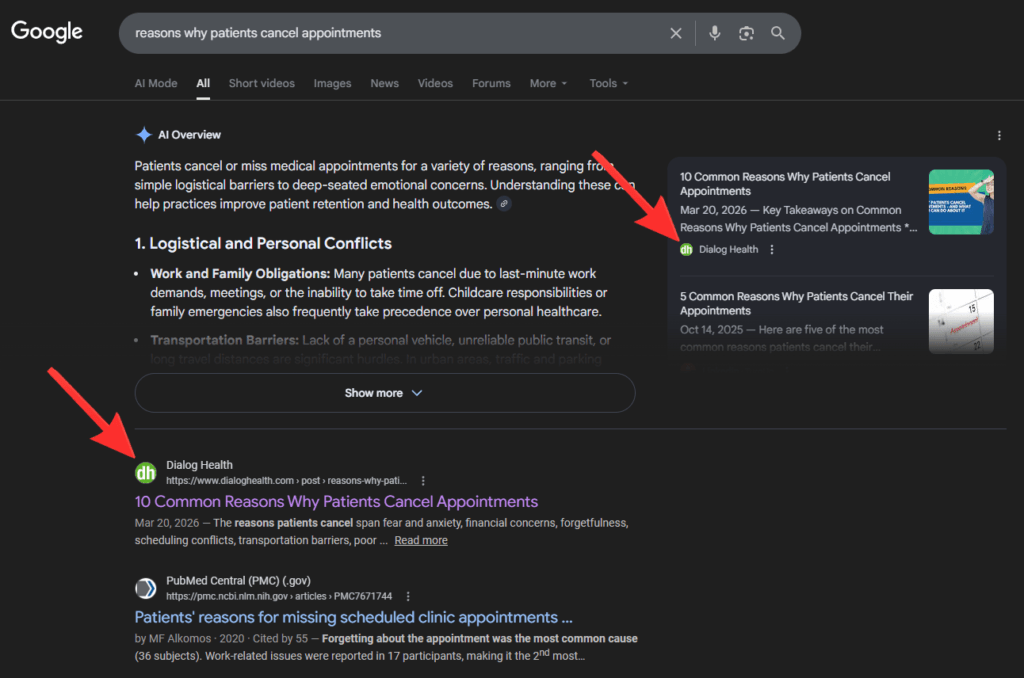
Three rewrites. Three wins. No exceptions.
The takeaway is simple: don’t publish and forget. Your best-performing content deserves to be revisited and improved – especially if your process has gotten better since you first created it.
Results: The Link Building Strategy
This is the part I told you not to skip.
Remember the linkable assets strategy from earlier? 23 statistical blog posts. $1,380 total investment by the client. The idea was simple – create content so useful that other websites link to it on their own.
Here’s what $1,380 bought:
| Month | Backlinks | Est. Value ($300/link) |
| Dec 2024 | 6 | $1,800 |
| Jan 2025 | 11 | $3,300 |
| Feb 2025 | 20 | $6,000 |
| Mar 2025 | 18 | $5,400 |
| Apr 2025 | 26 | $7,800 |
| May 2025 | 30 | $9,000 |
| Jun 2025 | 29 | $8,700 |
| Jul 2025 | 39 | $11,700 |
| Aug 2025 | 45 | $13,500 |
| Sep 2025 | 31 | $9,300 |
| Oct 2025 | 40 | $12,000 |
| Nov 2025 | 35 | $10,500 |
| Dec 2025 | 42 | $12,600 |
| Jan 2026 | 45 | $13,500 |
| Feb 2026 | 51 | $15,300 |
| Mar 2026 | 79 | $23,700 |
547 backlinks. $164,100 in estimated link value. From $1,380 in content production costs.
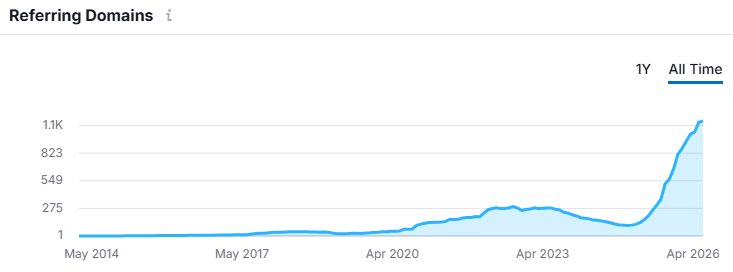
That’s a 119x return. And it’s not slowing down – it’s accelerating. March 2026 shattered every previous record with 79 backlinks in a single month. That one month alone generated $23,700 in link value – 17 times the entire original investment.
Every single one of these backlinks was earned organically. No outreach. No link exchanges. No paid placements. No link building budget at all. People find these statistical posts, cite the data in their own content, and link back. That’s it.
And these aren’t junk links from random directories. The backlink profile includes publications like Nature.com – one of the most prestigious scientific publications in the world. Forbes. Irish Times. Medical Economics. Cal.com. Telnyx. Healthcare industry publications, AI companies, SaaS platforms, medical practices, academic resources. Sites that would never respond to a cold outreach email are linking to this content because it’s genuinely useful.
This is what a flywheel looks like. The statistical posts were created once. They don’t need updating. They don’t need promoting. They just sit there, earning links month after month, compounding the domain’s authority, which helps every other page on the site rank better. The blog posts about patient scheduling and healthcare texting rank higher because the statistical content is pulling in authority from hundreds of external sources.
$1,380. One time. Still paying dividends months and months later. And the returns are getting bigger, not smaller.
The only maintenance I recommend is refreshing the data every 2-3 years to keep the statistics current. We’re planning on updating them through 2026 and 2027. It’s a small investment to protect a massive asset – because if a visitor lands on a statistics page and sees outdated numbers, you lose trust instantly. Fresh data keeps the links coming and keeps the humans who land on those pages engaged.
If I had to pick one strategy from this entire engagement to show a prospective client, it would be this one. Not because the other results don’t matter – they do. But because this demonstrates something most companies never achieve with their content: a self-sustaining engine that generates more value every month without any additional investment.
Results: AI Search Visibility
This wasn’t part of the original strategy. AI search barely existed when I started working with Dialog Health in July 2024. But as ChatGPT, Perplexity, and Google’s AI Overviews grew into real traffic sources, we added AI search visibility as a goal.
Turns out, the same things that make content rank well in traditional search – depth, accuracy, real data, topical authority – are exactly what AI models pull from when generating answers. We didn’t have to build a separate strategy. The foundation was already there.
Here’s where Dialog Health stands against their key competitors across AI platforms:
ChatGPT Visibility
Perplexity Visibility
Gemini Visibility
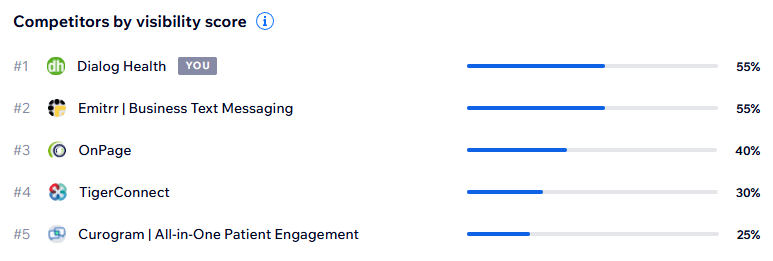
#1 in ChatGPT. #1 in Perplexity. Tied for #1 in Gemini.
The “best kept secret in healthcare” is not a secret anymore.
On top of that, Dialog Health is being cited in Google’s AI Overviews for multiple core business keywords. “Healthcare texting solution” – #1 in AIO. “Healthcare SMS” – #1 in AIO. “Healthcare texting” – #2 in AIO. These aren’t just traditional rankings anymore. When someone asks Google a question and the AI-generated answer at the top of the page references Dialog Health – that’s a level of visibility that didn’t exist two years ago.
AI bots are crawling the site thousands of times per week. OpenAI and Perplexity user bots combined hit the site 5,000-7,000 times per week at peak, meaning AI models are actively pulling Dialog Health’s content to answer user queries in real time.
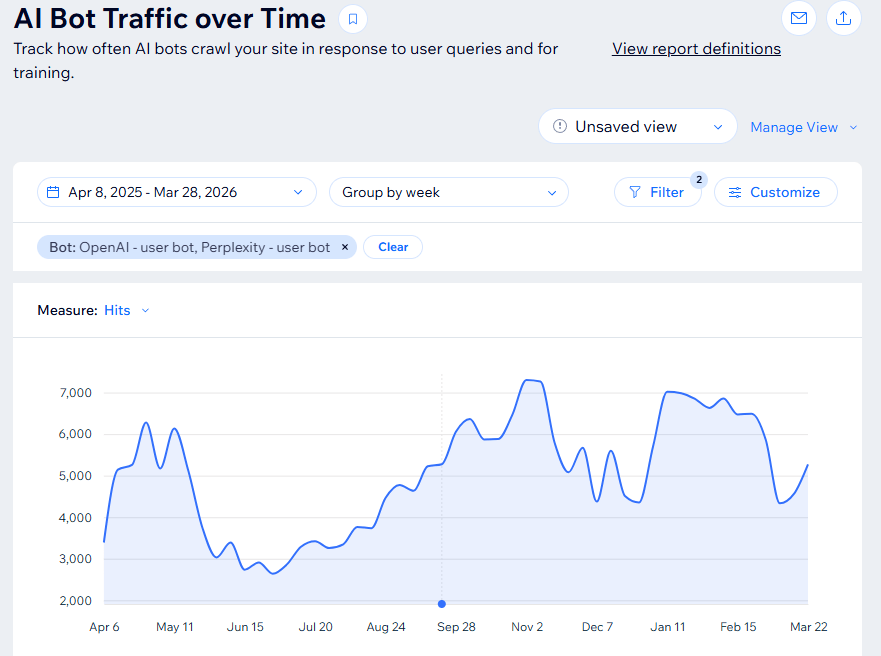
The Bing Webmaster Tools AI Performance data makes this even more concrete.
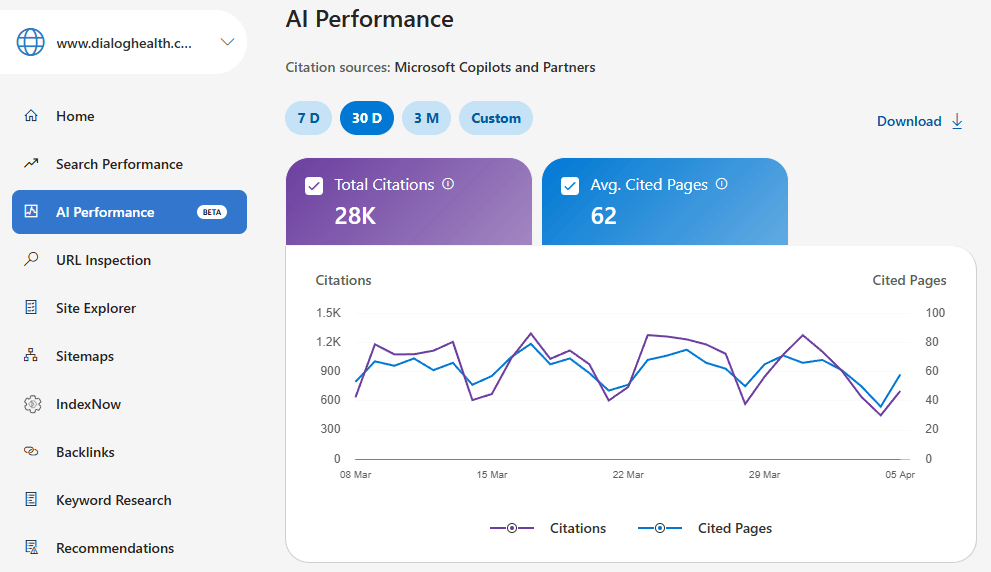
In the last 30 days alone, Dialog Health’s content was cited 28,000 times across Microsoft Copilot and its partners. 62 pages per day on average – out of a site with roughly 300 total pages. That’s 20% of the entire website showing up in AI search results every single day.
Zoom out to 3 months and the numbers get even more staggering: 87,000 citations, 59 pages per day on average, and 127 unique pages cited in total. That means AI search considers nearly 50% of all pages on the site worth citing. Half the website is being actively referenced by AI to answer user queries. For a site that was mostly ranking for brand terms 21 months ago, that’s a transformation that’s hard to overstate.
And remember that demo request from March 2026 – the one that came from ChatGPT? Someone asked an AI “what’s a good HIPAA-compliant texting solution for healthcare” and the AI said Dialog Health. That person requested a demo. That’s a real lead from a channel that literally didn’t exist when this engagement started.
Here’s the thing – we only recently added AI search as an option on the contact form. The first confirmed demo request from AI search came the same week we added it. I suspect there were more before that. People were probably selecting “Google” or “Other” because AI search wasn’t a choice on the form. We’ll never know exactly how many leads AI search quietly delivered before we started tracking it, but the timing tells me this channel has been working for longer than the data shows.
The content we built for traditional SEO is now working double duty – ranking in Google and getting cited by every major AI platform. Same content. Same investment. Two acquisition channels.
And we’re not done. The next phase is expanding our AI visibility strategy by targeting fan-out queries – showing up in the exact same type of content that AI models reference when answering our critical business terms. If an AI pulls from a source to answer “best healthcare texting platform,” we want to be in that source too. It’s a new layer on top of what’s already working.
Client Testimonial
| “Working with Tomislav has been a great experience. His expertise in SEO and research has helped us elevate our content strategy. He collaborates seamlessly with our marketing team and works closely with leadership team to shape insightful, high-impact content ideas that adds value to our thought leadership presence. What sets Tomislav apart is the effort he puts into truly understanding our business. He even joined a demo of our product, which allows him to outline content that is not only optimized for Google and AI search engines, but also understands the value of our product to help solve our target audience’s pain points. He is very professional and takes pride in his work. His expertise has helped us improve our traffic, ranking and qualified leads. We are grateful he is part of our team.” — Rosanne Palmisano, CMO @ Dialog Health |
Reach Out
If you want results like these for your business, let’s talk. No pitch deck. No 47-slide presentation. Just a conversation about where you are, where you want to be, and whether I can help you get there.
Email: tomislav@tomislavhorvat.com
Or drop me a message: